Showing posts with label carey mulligan. Show all posts

Friday, December 6, 2013

INSIDE LLEWYN DAVIS Review


1961, Greenwich Village, New York. The dawn of the early folk music scene. We meet Llewyn Davis, struggling musician. Played by Oscar Isaac (in plenty of films but never a leading solo man), he sits on a stool at a mic before a smattering of an audience inside a dingy club. "Hang me, oh hang me, and I'll be dead and gone," he croons. Performed by Isaac, the music is the first and foremost thing to notice about Joel and Ethan Coen's latest, "Inside Llewyn Davis." The second thing to notice: this is the writer-director duo's perhaps least plot-driven film but the most solemnly meditative since their Oscar-winning "No Country for Old Men." It's a contemplative character study of the highest order and while a bit obtuse, the film looks deep at how a great artist can (or cannot) rise from great adversity.

Llewyn steps off the stage, enters the club's back alley and gets beaten to the ground. Why? We don't know. Just his luck, we suppose. The film is a slow burn as we watch him crash couch to couch, a wandering soul looking for himself. Here's a man not trying to make it as a successful musician but trying to make it at all. He slumps into the apartment of Jean (Carey Mulligan) and Jim (Justin Timberlake). No backstory required. We deduce that Llewyn once slept with Jean and uses her as a crutch. Brashly played up by Mulligan, she hounds on him calling him a useless asshole. If they ever once were, they are no more. With Jim, he and Jean have their own folk group that gets a better reception than when Llewyn plays. It eats at him. Embodying Llewyn, Isaac delivers a bittersweet combination of sorrow and deadpan humor.

One gig from Jim, which Llewyn decides to take for some quick cash, is a goofball song about President Kennedy and rockets, "Please Mr. Kennedy." Adam Driver of HBO's "Girls" sits in as the guy making the cartoonish "whoops!" and "zoings!" of the accompaniment. It's a bad tune that's somehow still highly enjoyable, a signifier of the kind of songwriting care that went into the script. In a rush, Llewyn decides to not sign a contract to receive royalties on the song which, inevitably, will later become a hit. Desperate for exposure and let down by his ancient manager, he hitchhikes to Chicago to put himself in person with a music producer.

Enter a most surrealist vision, a mood which permeates throughout, the film's aesthetic clouded in a dreamlike haze. Llewyn hitches a ride with the quiet, resolute Johnny Five (Garrett Hedlund) and the mythic, rude Roland Turner (John Goodman). How these two came to be, and where are they going? We don't know. They are only a device for Llewyn to continue on his way. A Coen mainstay, Goodman arrives back to his first film for the brothers in 15 years and commands the screen for the brief, bizarre role.

There's also an orange cat. And plenty of other strange, illusive encounters. But there's the cat. The one Llewyn accidentally lets escape from one of his couch-surfing apartment stays. The one he thinks is the same one he lost but ends up being a different orange cat. But there's always the cat. The burden. We follow Llewyn for one week in his life. And at its conclusion, we find ourselves right back where we started. It's a trick the Coens play but not a bad trick; it's an existential one that illustrates an open-ended theme, one about the journey to finally make it. It's cyclical; it's all the same. It repeats and repeats until eventually you either make it -- or, in the case of Llewyn, our sad sack hero, you don't.

Saturday, May 11, 2013

THE GREAT GATSBY Review


In its exuberant excess -- a signature style of Baz Luhrmann that he brings to a culmination here of pure flash, glitz and glam -- the director, perhaps unconsciously, evokes the same distant observation of that very excess F. Scott Fitzgerald described in his novel. It's not so much a classic adaptation than it is, mirroring the world Gatsby inhabits, a perfectly over-the-top display of crass indulgence. The fact that Lurhmann's audacious film is so grossly decked out in bells and whistles is more fitting than unnecessary in capturing the spirit of Fitzgerald's masterpiece: the over-the-top parties, the roaring 20s sensibilities and, most of all, the aching despair at the center of it all.

"The Great Gatsby" is also probably the only movie this year that will use 3D to proper effect. Luhrmann and cinematographer Simon Duggan put artistry in their use of the technology to soar above Manhattan, over the city and back into the illustrious mansions, twirling in and out of Gatsby's extraordinary parties. It creates an entirely sensory space, a highly stylized vision and nearly picturesque world where every scene is a perfectly choreographed dance. We open on a black-and-white Gatsby logo that pulses into golden life and zooms in on the infamous green light, the light upon which Jay Gatsby (Leonardo DiCaprio) gazes from his palace on East Egg across the bay into West Egg wherein lives the desired Daisy Buchanan (Carey Mulligan).

Next door to Gatsby is the curious and wide-eyed Nick Carraway (Tobey Maguire) who moves to town to become a writer but ends up in the bonds business. He goes across the bay to visit his cousin Daisy and meets her husband Tom, (Joel Edgerton) who almost openly is having an affair with another woman, Myrtle (Isla Fisher), while the couple's friend, Jordan (Elizabeth Debicki), watches everything through a lens of close scrutiny and awareness. She also has information on the illusive Gatsby about which rumors swirl and has peaked Nick's immediate interest. Nick soon receives a personal invite from Gatsby to one of his big bashes to which everyone else in town just shows up. And it's not just any bash; it's the biggest bash in town.

The first Gatsby party awashes the audience in shimmering decorations, flowing champagne, and dancing and music galore. It's the pinnacle of booming decadence, Lurhmann gleefully throwing money into his grand production as if he himself is the Gatsby of filmmaking. The party scenes are dizzying and reminiscent of the zaniness of "Moulin Rouge!" highlighted, of course, by the film's largely promoted soundtrack that lives up to the hype. Flappers bust out to the beats of Jay-Z while the late-party hangover -- deflated decorations and discarded bottles covering the floors -- is set to a somber, crooning Florence Welch.

The introduction of Gatsby is the idealistic movie star moment. Panning up, we see a man smiling knowingly, sly and so confident, holding up a glass of champagne, fireworks over his head. It's bombastic, so very Baz and so fitting for introducing such a character -- and only Leonardo DiCaprio could've pulled off the role. It's hard to picture anyone else bringing potent vulnerability to such a famed literary character. He also looks as if he stepped out of a time machine from his days of "Titanic."

The core of the film is the ill-fated romance between Jay Gatsby, the powerhouse, and Daisy Buchanan, the delicate flower. Set to the anthem of Lana Del Rey's "Young & Beautiful," the high point of the film's robust soundtrack and score, we watch this superficial, material-driven world come crumbling down within the dark side of the American dream, the beautiful and tragic world that it is. And in the daring director's ability to capture that exact essence, that pointed feeling of wasteful extravagance, he succeeds immensely.

Tuesday, September 20, 2011

DRIVE Review


"Drive" (2011)

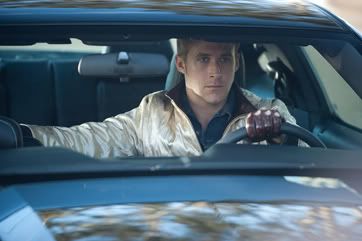
He is a driver and only a driver. He has no name to the men he works for and not even to us. He's the guy behind the wheel who will be there if you tell him when and where. He's the getaway driver and a man defined by what he does. We're introduced to this driver -- with his steely blue eyes and gloved hands gripping the steering wheel -- during a job. He's cool and collected even during a vehicular game of cat-and-mouse with the authorities. It's a sequence wrought with tension and suspense and one of the most expertly handled car chases I've seen. Eyes fixated on the road and not ever on the faces of the criminals he carts around, the driver doesn't commit the act; he only gets those doing so from point A to point B. "I drive," he says.

Albert Brooks, who's not at all funny here, plays a nasty man of business named Bernie in "Drive" from Danish director Nicolas Winding Refn ("Bronson," "Valhalla Rising"). His character is a producer for the type of B-movies that the driver does car stunts for, which is the driver's day job when he's not a driver for hire by night. Bernie describes the movies he used to produce in the 80s as action thrillers lauded by critics. Some critics even called them European. But he thought his movies were shit. As a self-knowing nod, he could be describing the very movie he's in -- minus the part about being shit.

The modern soundtrack recalls 80s synth with titles presented in a retro pink cursive font like something out of "Miami Vice." A sleek, subdued and sophisticated European sentiment permeates the mood. It's an action thriller for the art house crowd but in no way pretentious. "Drive" provides the perfect elements of a genre flick in high fashion emphasizing the master of craft. While putting the pedal to the metal, there's respect for acting and writing. It plays on commercialism while becoming an exact rebuttal to convention.

As the driver Ryan Gosling sustains an impenetrable and indiscernible calm that's unnerving. He has the severe cool of a young George Clooney, and here he seems to be channeling him in "Michael Clayton" form. He's wordless and expresses a wide expanse of inner-thought through a shift in the brow or a twinge of the mouth. A master of nuance, Gosling gives us a brilliant work of existentialism through moments of idling silence before this mysterious wheel man slams on the accelerator. He's a man who's been around cars most his life mentored by a fatherly figure, a mechanic named Shannon (Bryan Cranston of "Breaking Bad"). The driver lives in an apartment complex and becomes close with his neighbor, Irene (Carey Mulligan). She has a young son, Benecio (Kaden Leos), and a husband, Standard (Oscar Isaac), who's in jail. The driver and Irene grow fond of each other, but Standard returns home within the week. Once there he's not jealous of the driver but instead finds opportunity. He's in trouble -- the kind of trouble the driver can deal with.

Filling in the blanks of back story are characters' expressions and subtleties. The film doesn't wear its emotions on its sleeve but they do run deep. The script by Hossein Amini is minimal in dialogue, so reading between the lines is essential and it works. The driver's loyalty to Irene's family is obvious as he accepts a job with little to no benefit to himself. It's a heist that goes horribly wrong with bloodshed aplenty namely from Christina Hendricks of "Mad Men" who plays a sexy accomplice. With the smooth purr of seduction "Drive" offers filmgoers, it is a gradual and moody escalation with hyper-violent and ultra-stylized eruptions that fuels this beast's engine. It's a simple parable of fast cars and dangerous deeds involving men not defined by what they say but, instead, by their actions -- no matter the blood stains left in their wake.

Sunday, October 17, 2010


"Never Let Me Go" (2010)

In an alternate reality, advances in science and medicine have allowed the human race to live well past one hundred years old. This does not come without some sacrifices, though. Special schools have been established where children live, grow up and learn in their own isolated society within the larger one. The children are told they must stay healthy, that they are gifted and they are Donors. They live only to donate to others: kidneys, hearts, livers, other vital parts. Somewhere between one and four of their donations, they are complete, and their short lives come to an end.

While having the elements of science fiction, "Never Let Me Go" places them in the bleak reality of life in 70s, 80s and 90s England. This is a drama with an aching sadness as every scene is dripping with an intense melancholic mood that haunts and lingers with every gorgeously photographed shot thanks to Adam Kimmel's cinematography. As it is with dystopias, this one has parallels to our own world but what makes this one sting so profoundly is how real it feels.

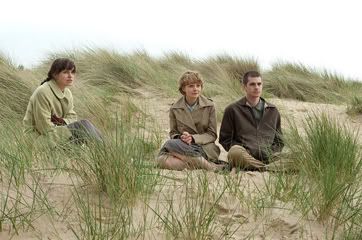
There is an ominous air to Halshaim, the school where lifelong friends Kathy (Carey Mulligan), Ruth (Keira Knightley) and Tommy (Andrew Garfield) spend their childhood. Working as a British boarding school, the purpose of Halshaim is unclear at first, but slowly the mystery gets unveiled to not only us but the children, as well. They receive the harsh truth from a visiting guardian, Miss Lucy (the wonderful Sally Hawkins), who later gets removed from the school. The revelation that these children will never fully grow into adulthood is deeply unsettling knowing their lives will be over by the time they're in their 20s. Upon hearing this, however, the children also don't know any different; they're forced to accept their fate because it's all they are taught to understand.

The three friends grow up and move on to The Cottages, a new and more intimate living space where teenagers from other schools gather together. Between their time at Halshaim and here, a romance blossoms between Ruth and Tommy but much to Kathy's despair as she was originally interested in him. Ruth becomes the barrier to the true love between Kathy and Tommy, the love that had been there all along but was then interrupted by Ruth's selfishness. The trio's story goes on, parting ways and reuniting again, but their most important time together comes at this stage in their lives at The Cottages. Beyond this, they move again losing track of each other as Kathy, our narrator of the story, goes on to be a Carer for other Donors before she becomes one herself.

Adapted from Kazuo Ishiguro's 2005 novel of the same name, director Mark Romanek ("One Hour Photo") and screenwriter Alex Garland set Ishiguro's tale to an almost painfully somber and quiet tone accompanied by Rachel Portman's heartbreaking score. This is not a hindrance, though, and actually is beneficial to the disturbing and upsetting material. It is soulfully meditative, an elegantly fragile film that muses over not only death but the passing of life that cannot be avoided. The circumstances of these poor human beings within this miniature society of Donors is crucially devastating, a reflection of our own fears of love lost and lives taken too soon.

If you've seen Carey Mulligan in "An Education," you already know she is one of the finest young actresses working today. Likewise, "The Social Network" proved Andrew Garfield to be a stunning young actor. Put them together here, and their scenes are exquisite and emotional powerhouses. Their mesmerizing qualities are only exemplified by Keira Knightley who usually has center stage but here is effective as a supplement to their passion, her character who later wants to make amends for tearing the couple apart.

There is an old rumor at Halshaim that if two Donors were to fall in love, they can have their donations postponed. Tommy and Kathy are naturally in love but proving such love would be proving their humanity. How human can someone be who is mass produced as a product? Mass produced for one purpose, the purpose to allow others to live longer. And yet, are their lives any different than the ones they're being used toward saving and prolonging? It's so sorrowful to watch these characters. Their subdued nature seems almost necessary to cope. How else could you go on conscious of your own passing, knowing when it would be and for what reason, other than to have faith in letting go?

Saturday, July 10, 2010


"The Girl Who Played with Fire" (2010)

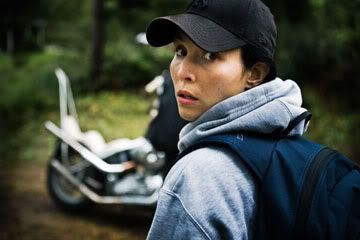
Actress Noomi Rapace returns in the lead role of Lisbeth Salander in "The Girl Who Played with Fire," the sequel to "The Girl with the Dragon Tattoo" based off the novels by Stieg Larsson. Lisbeth still has the dragon tattoo covering her back but now her hair has grown out and she no longer wears a spiked choker, but she remains living in complete isolation from others hacking into computers to find out any outside information. In the second movie starring her we learn a little more about why she lives the way she does. She has a past where she indeed played with fire, dousing her father in gasoline after he abused Lisbeth's mother. She was labeled as socially incompetent as a child by cruel men, and her motivation for vengeance is still fueled by men's violence against women. This is still greatly Rapace's movie whose eerie beauty combined with her nearly feral intensity makes Lisbeth Salander into a character who, even more so here than in the first film, keeps us watching.

The sequel comes from a new set of filmmakers than the last, written by Jonas Frykberg and directed by Daniel Alfredson. The results, however, are more or less the same. This one does feel slightly less polished than its predecessor, though, and the cinematography has less room to breathe due to so much plot trying to be stuffed, which results in a much flatter look than before.

Lisbeth has just returned to Stockholm after having escaped abroad at the conclusion of the previous film. Meanwhile, Mikael Blomkvist (Michael Nyqvist) and the team at Millenium have just hired a young journalist who's working on a story that reveals a sex trafficking ring with the assistance from research done by his girlfriend who just published her thesis on the topic. Mikael later finds the two journalists shot and killed in their apartment, and Lisbeth is soon after framed for the murders. It is then a fight for Lisbeth's life as she and Blomkvist each try to prove her innocence and find the real killers.

It sounds simple enough, but there is a large supporting cast that gets confusing to follow. Characters who were present before make a return such as Erika Berger (Lena Endre) and the absolutely foul Nils Bjurman (Peter Andersson) whose previous encounter with Lisbeth was anything but pleasant. New faces include a detective named Bublanski (Johan Kylen) along with Lisbeth's occasional lover, Miriam Wu (Yasmine Garbi). Lisbeth and Miriam share a rather questionably evocative sex scene together. Then there's the villain who cannot feel pain, a hulking blond man (Mikael Spreitz) who looks like he fell out of the latest Bond film and accidentally found his way into Larsson's cynical world.

"The Girl Who Played with Fire" carries a whole lot more suspense than the last along with quite a bit more blood. It backs down, however, on the social commentary while trying to flesh out all the narrative details making for a much more convoluted film than perhaps necessary. And, inevitably, being a middle piece to a trilogy it struggles to stand alone unlike the first feature. This one is obviously preparing for what will probably be an impressive conclusion, "The Girl Who Kicked the Hornet's Nest," which has its U.S. release this October.

The chemistry between the leads played by Rapace and Michael Nyqvist remains miraculously strong and compelling even when they share only one scene together; they are otherwise connected only by cyberspace. The rumor mill keeps churning out who may be playing Lisbeth and Blomkvist in Fincher's U.S. remake of "Dragon Tattoo" with sights now set on Daniel Craig and Carey Mulligan. Let's hope they're ready to fill some big shoes.

My review of "The Girl with the Dragon Tattoo"

Sunday, November 15, 2009

An Education Indeed

An Education


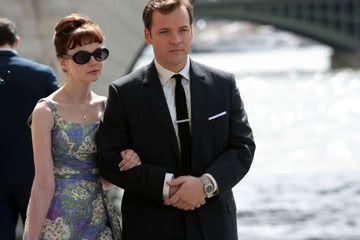
It's 1961 in London just before the grooviness and sexual liberation age of The Beatles hit and right around the time post-war cautious conservatism was still lingering. Jenny (Carey Mulligan) is a 16-year-old girl, straight-A cello-playing student living in a tidy suburb of London, Twickenham. She is aspiring to attend Oxford, but she is also bored to death. And then enters David (Peter Sarsgaard), a man in his early 30s who promises not only something new but simply for something to happen, the feeling of being alive. Danish director Lone Scherfig ("Italian for Beginners") is careful not to let her new film, "An Education," fall into the conventional holes it easily could've with such a premise. With writer Nick Hornby ("About a Boy," "High Fidelity"), they have taken the memoir by British journalist Lynn Barber and shaped it into a smart, quiet, and charming coming-of-age story that sparkles with the knowledge and detail of an era. It shows a social revolution not yet in the making but one in the distant horizon, and one that Jenny is ready to grasp with open arms.

David comes driving up in the pouring rain offering to put Jenny's cello in the backseat so it wouldn't get any wetter. They begin a conversation about classical music, and it's in this exact moment that we realize what a smooth and suave guy David is. He's reasonably handsome, but most of all, he knows how to turn on the charm, and in that sense he becomes irresistible. They just so happen to bump into each other again, and David invites her for a night out. Jenny meets David's fabulous and cultured friends, Danny (Dominic Cooper) and Helen (Rosamund Pike), and next thing she knows she's caught in a whirlwind of concerts, restaurants, jazz clubs, and the leisure of high-living. David wants to take her on a weekend in Oxford and then a trip to Paris.

How are the parents of a 16-year-old handling all of this? Well, they become just as disillusioned as Jenny. Her mom (Cara Seymour) and dad (Alfred Molina) are an old-fashioned couple who want the best for their daughter, and they are very loving about it. When David enters their home well-dressed and well-mannered, they can't find the harm in him. They are naive just like Jenny. How he explains his interest in Jenny is that he's interested in her mind, intellect, maturity, and potential. He wants to teach her things, and Jenny's parents view it as an older gentleman assisting her daughter in the real-world, an opportunity neither of them can pass up. Paris is safe because, well, David's aunt will be there chaperoning, of course. It's a little white lie, the type of lies David is filled with, but ones so minuscule they are never harmful. You see, David is a bit of a scoundrel, but the film is keen on not letting audiences aware of that until later, right about the time Jenny starts to realize it. And yet, she goes along with him still because, even when she sees through him, she wants to continue playing along to become a part of that lifestyle. She wants to embrace it in order to become it.

Then there's the possibility of sex. On her seventeenth birthday, David sweeps Jenny off her feet, but it turns out sex was the least of it. "All that poetry about something that lasts no time at all," Jenny said after the fact. Peter Sarsgaard and Carey Mulligan pull off the unthinkable by making this seemingly off-putting relationship one that is believable and unsentimental in the truths it reveals. Sarsgaard strikes the perfect balance amongst a tricky role by becoming a slippery snake of a predator while also being sweet and nonchalant. And he makes a perfect duo with Mulligan whose look is reminiscent of Audrey Hepburn. She is absolutely breathtaking and worthy of an Oscar nomination. Everything she does we have faith in her decisions, even if it doesn't seem right at the time, because she has the ability to get us on her side. She's the epitomical lovable character.

Along the way, Jenny is confronted by her young teacher (Olivia Williams) when Jenny starts becoming the talk of the school as she's courted by an older man. This teacher is concerned for Jenny potentially throwing away the possibilities of her bright future. There's also vicious disapproval from the headmistress, played by Emma Thompson in a fiery passion. There are two strands of education here: one that gets a young girl into Oxford and one that teaches a young girl a thing a two about life and living. And while both are important, it would appear that one in particular gives Jenny a certain edge. This is a lesson, an education, that'll stick with her because sometimes the lessons that hurt you the most affect you the greatest. Yes, of course Jenny's been to Paris before, but the boys her own age don't need to know that.