Showing posts with label george clooney. Show all posts

Saturday, October 5, 2013

GRAVITY Review


What more is there to say about "Gravity," director Alfonso Cuaron's diamond of a film? It is a masterpiece, boldly announcing the future of cinema and literally like nothing else we've seen before in the history of the medium. It rewrites the rules right before our eyes, managing to show us something that makes the power of filmgoing awe-inspiring all over again. It thrills us, challenges us and is hands-down one of the most visceral and stressful 90 minutes you'll ever experience.

In an age where we consume media everywhere but inside a movie theater, Cuaron's harrowing space journey demands audiences back. One of the film's greatest features is simply existing as a film that must be viewed in a large-screen format in a dark room with a full audience. The power in the filmmaking, especially the stunning cinematography from Emmanuel Lubezki (of Cuaron's "Children of Men" and Terrence Malick's "The Tree of Life"), is that it literally transports audiences into space with the characters. For once, 3D feels necessary for a film. Even better than the milestone-setting "Avatar" and then "How to Train Your Dragon" and "Life of Pi" to follow, it's undeniably suitable to the zero-gravity setting where traditional horizontal and vertical planes are rendered irrelevant creating a free-standing inky black landscape.

Speaking of "Avatar," that is the easiest comparison in terms of groundbreaking visual landmark. James Cameron was a large supporter of Cuaron during the early stages of this film, a whole seven years ago back when the technology used to make his project wasn't even invented yet. "Gravity" is also a movie about impossibility. A bleak phrase appears on the screen before the first shot begins: "Life in space is impossible." Years ago, this film was impossible. And going back further decades ago, space travel was impossible. Cuaron dares us to see what impossible can achieve.

It all starts with a gorgeous 17-minute shot that establishes medic Ryan Stone (Sandra Bullock) and Matt Kowalski (George Clooney) in the vast expanse of space inside their suits on assignment to repair Hubble. "You can't beat the view," Kowalski says, gazing down at the blue earth. He's not kidding. That is until a storm of catastrophic debris destroys their spacecraft and sends them adrift with no easily feasible way of getting back home. Terror sets in for both them and us.

Though epic in scope, Cuaron's film is simple at its core. It's about high-powered technology going wrong, like a shipwreck movie in space. (Which is curious because Robert Redford's literal shipwreck movie "All Is Lost" comes out later this year.) Apart from the visual wonderment, the sound design in "Gravity" is equally astonishing: the contrast created from loud, overwhelming bass crescendoing into absolute, pure silence. And even the sound from the perspective of the characters where voices come through over radio and the muted thumping of all other sounds, it's like we're right inside the suit with them.

The dialogue is one thing of note. Why is Kowalski so jokey and chipper? Why is Ryan egging herself forward with motivational cliches? Because if not for their own voices, there is only stark silence. It's that terrifying thought of loss of self and affirming one own's tiny existence in the universe that establishes Cuaron's humanism. For any step into sentimentality, however, there's a constant undertone of existential dread. There's really only so much that can be said about "Gravity" because here's a film that says it all for itself. Never have the words "you have to see it to believe it" meant more. Go see it.

Monday, January 23, 2012

84th Annual Academy Award Nomination Predictions


Here I'll be predicting all the major categories for the 84th Annual Academy Award nominations which get announced tomorrow morning!


Best Picture
1. The Artist
2. The Descendants
3. Hugo
4. The Help
5. Midnight in Paris
6. War Horse
7. Moneyball

I predict there will be seven nominees, but here's the rest if it gets expanded to ten:

8. The Girl with the Dragon Tattoo
9. Bridesmaids
10. Tinker Tailor Soldier Spy

Best Director
1. Martin Scorsese, "Hugo"
2. Michel Hazanavicius, "The Artist"
3. Alexander Payne, "The Descendants"
4. Woody Allen, "Midnight in Paris"
5. Steven Spielberg, "War Horse"

Best Actor
1. Jean Dujardin, "The Artist"
2. George Clooney, "The Descendants"
3. Brad Pitt, "Moneyball"
4. Leonardo DiCaprio, "J. Edgar"
5. Michael Fassbender, "Shame"

Best Actress
1. Viola Davis, "The Help"
2. Michelle Williams, "My Week with Marilyn"
3. Tilda Swinton, "We Need to Talk About Kevin"
4. Meryl Streep, "The Iron Lady"
5. Glenn Close, "Albert Nobbs"

Best Supporting Actress
1. Berenice Bejo, "The Artist"
2. Octavia Spencer, "The Help"
3. Jessica Chastain, "The Help
4. Melissa McCarthy, "Bridesmaids"
5. Shailene Woodley, "The Descendants"

Best Supporting Actor
1. Christopher Plummer, "Beginners"
2. Albert Brooks, "Drive"
3. Kenneth Branagh, "My Week with Marilyn"
4. Nick Nolte, "Warrior"
5. Jonah Hill, "Moneyball"

Best Original Screenplay
1. 50/50
2. Midnight in Paris
3. The Artist
4. Bridesmaids
5. Beginners

Best Adapted Screenplay
1. Moneyball
2. The Descendants
3. Hugo
4. The Girl with the Dragon Tattoo
5. The Help

Monday, January 16, 2012

69th Annual Golden Globe Award Winners


I guess when Ricky Gervais was surprisingly invited back to host the Golden Globes, it was under the condition that he would do his opening monologue and then disappear for the rest of the evening -- because that's exactly what happened. His opening zingers were actually great and not too harsh or cynical like last year. Bashes toward Kim Kardashian were a must, and Gervais was smart about knocking the HFPA itself as opposed to his celebrity spectators.

A quick hit on first presenter Johnny Depp was perfect allowing Gervais to pick up right where he left off last year. "Have you seen 'The Tourist' yet?" he asked Depp.

And then he jabbed, "The Golden Globes are just like the Oscars but without all the esteem." It also was two-and-a-half hours before he got bleeped, and that was right around the time Meryl Streep warranted herself a bleep. Penis jokes were aplenty most notably during George Clooney's speech when he gave a shout out to Michael Fassbender's full nudity in "Shame."

It was nice that the evening didn't feel entirely all about "The Artist," although it's still the one to beat at the Oscars. Instead, Alexander Payne's "The Descendants" closed out the night with a win for Best Picture Drama. "The Artist," however, still led a total number of wins at three followed by "The Descendants" with two.

"The Artist" took home awards for Best Score, Best Picture Comedy or Musical and Best Actor Comedy or Musical for Jean Dujardin. It only made sense for Dujardin to win in his category because all of his actor competition landed their nominations under Drama. This included George Clooney who won Best Actor Drama for "The Descendants." He's now the one to beat at the Oscars, and Dujardin is his closest competition.

The love was pretty widespread including a Best Director win for Martin Scorsese ("Hugo") over Michel Hazanavicius for "The Artist." Meanwhile Woody Allen took home the award for Best Adapted Screenplay ("Midnight In Paris"). For whatever reason, "The Adventures of Tintin" won over "Rango" for Best Animated Feature perhaps to get Steven Spielberg up on the stage.

The other surprise of the night was Meryl Streep for "The Iron Lady" winning Best Actress Drama over Viola Davis for "The Help." I still believe Davis is the front-runner for the Oscar, however. Streep gave a blind speech having lost her glasses. George Clooney made an attempt to pass them up, and they made it to David Fincher...and stayed there. Perhaps it was his anger toward Streep for winning over Rooney Mara.

Wins for Octavia Spencer for "The Help" and Christopher Plummer for "Beginners" further cemented them as the clear front-runners in their respective Best Supporting categories at the Oscars. Spencer's speech was exceptionally moving and timely touching on the MLK holiday.

Morgan Freeman received his tribute with the Cecil B. DeMille award, and everyone was disappointed when he didn't do the voiceover for his own career montage. Helen Mirren also managed to make a drunken fool of herself introducing him.

So it comes down to "The Artist" and "The Descendants" over what's going to nab the top prize at the Oscars. The former is still the clear leader, but last night's wins for the latter pushes up its potential.

Check here for a full list of the 69th Annual Golden Globe Award winners, and stay tuned for the announcement of the 84th Annual Academy Award nominations on Tuesday, January 24.

Thursday, December 15, 2011

69th Annual Golden Globe Award Nominations


Unlike last year when the Hollywood Foreign Press Association (HFPA) included completely out-there nominees in the Best Comedy or Musical categories -- hello, "The Tourist" -- the films included this year are legitimate award contenders, which really makes things interesting.

Leading the nominees for the 69th Annual Golden Globe Awards were "The Artist" with six, "The Descendants" with five, and tied at four were "The Ides of March," "Midnight in Paris," "The Help" and "Moneyball."

The nominees for Best Picture Drama were "The Descendants," "The Help," "Hugo," "The Ides of March," "Moneyball" and "War Horse." The surprise here is the inclusion of George Clooney's "Ides of March" which otherwise hasn't been getting any awards attention. It'll be curious to see whether the acknowledgement from the HFPA here can bolster its chances at the Oscars. Probably not considering the snub for "Drive," which has great award presence elsewhere.

Notice the absence of "The Artist" above because it got included instead within the Best Picture Comedy or Musical category along with "Midnight in Paris," "50/50," "My Week with Marilyn" and "Bridesmaids."

The one I don't understand here is "My Week with Marilyn" because -- although I haven't seen it yet -- I'm willing to bet there's about as much humor in that as there is in "The Descendants," which was included in Drama. In any case, including movies here that have potential in other categories, too, edged out other worthy comedy or musicals such as "Crazy, Stupid, Love." and "The Muppets."

The split between Best Picture Drama and Best Picture Comedy or Musical has divided up big contenders that will otherwise be competing in the same category at the Oscars. Now "The Artist" has been completely removed from the equation against other films -- which is nice, giving others a chance such as "The Descendants" -- but it doesn't help in predicting what will take the top prize with the Academy.

Best Director is also a telling category. The HFPA really has faith in "The Ides of March" opting to include George Clooney in the list. Joining him were Woody Allen for "Midnight in Paris," Martin Scorsese for "Hugo," Alexander Payne for "The Descendants" and Michel Hazanavicius for "The Artist." No Steven Spielberg for "War Horse."

David Fincher's "The Girl with the Dragon Tattoo" got completely left out aside from a Best Actress nomination for Rooney Mara and another for Best Score. Even more curious was the complete absence of Stephen Daldry's "Extremely Loud & Incredibly Close." Does it have something to do with having such a late entry? Also absent is Gary Oldman and "Tailor Tinker Soldier Spy," which will most likely get redeemed through BAFTA awards.

Joining Rooney Mara for Best Actress Drama were nominations for Glenn Close for "Albert Nobbs," Viola Davis for "The Help," Meryl Streep for "The Iron Lady" and Tilda Swinton for "We Need to Talk About Kevin." Where's Michelle Williams, you ask? She's included within the Best Actress Comedy or Musical category along with the film in which she starred. Joining her were two nominees from "Carnage," Jodie Foster and Kate Winslet, and Kristen Wiig for "Bridesmaids." It's interesting that the HFPA went for Wiig over Melissa McCarthy who has the most Oscar pull.

The nominees for Best Actor Drama were Michael Fassbender for "Shame," George Clooney for "The Descendants," Leonardo DiCaprio for "J. Edgar," Brad Pitt for "Moneyball," and surprisingly enough, the HFPA went for Ryan Gosling in "The Ides of March" over his performance in "Drive." Swap out Gosling and throw in Jean Dujardin, and this could be our Best Actor Oscar race.

Dujardin instead appears in the category of Best Actor Comedy or Musical once again making it hard to decipher how he'll stand up to his competition at the Oscars. With him were Brendan Gleeson for "The Guard," Joseph Gordon Levitt for "50/50," Owen Wilson for "Midnight in Paris," and -- thank goodness! -- Ryan Gosling for "Crazy, Stupid, Love." Well deserved.

Albert Brooks marks the only "Drive" recognition with his nomination for Best Supporting Actor alongside Kenneth Branagh for "My Week with Marilyn," Viggo Mortensen for "A Dangerous Method," Christopher Plummer for "Beginners" and Jonah Hill for "Moneyball." Hill could have the potential at this point to make it to Oscar, but I have a feeling it's going to be another Mila Kunis for "Black Swan" and will get left off at the end.

Best Supporting Actress nominees included Berenice Bejo for "The Artist," Jessica Chastain for "The Help," Janet McTeer for "Albert Nobbs," Octavia Spencer for "The Help" and Shailene Woodley for "The Descendants." This very well could mirror the Best Supporting Actress race at the Oscars unless McCarthy can edge out McTeer.

And, finally, the HFPA decided to nominate "Cars 2" among the Best Animated Feature nominees. Why, exactly?

Check out the full list of nominations, and tune in to watch the 69th Annual Golden Globe Awards on Sunday, January 15 at 8 p.m. on NBC!

Monday, December 5, 2011

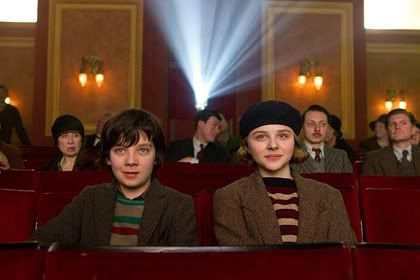
HUGO Named Best Film by NBR


The National Board of Review announced their winners for this year. And while they don't have too much bearing on the overall awards landscape, they still are worth taking a look at -- especially this year considering what got decided as Best Film.

Martin Scorsese's "Hugo" was named Best Film, and Scorsese received Best Director.

Looks like "Hugo" is more of a year-end awards contender than I had at first anticipated, which means I need to get myself to a theater quickly to see it for myself.

Other notable wins include all those for Alexander Payne's "The Descendants." It took home Best Screenplay as well as Best Actor for George Clooney and Best Supporting Actress for Shailene Woodley. I see a trend, and one that could very well make its way to Oscar.

Sunday, November 27, 2011

THE DESCENDANTS Review


It has been seven years since we've received a film from writer and director Alexander Payne. The last was 2004's Best Picture nominee Sideways. His new film, "The Descendants," is exactly what we've come to expect from Payne as a filmmaker and a guaranteed Best Picture contender at this year's Oscars. It is a miracle how effortlessly Payne captures the messiness of life. He is a master at digging deep and bringing out rich meaning and emotion out of situations that also make you laugh. In all of his films he performs a carefully choreographed balancing act between wit and poignancy, sharp comedy and shattering drama -- this one is no different and could even be considered Payne's best yet.

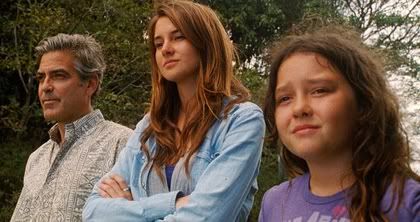
Adapted from the 2009 novel by Kaui Hart Hemming and co-written by Payne, the movie takes place in Hawaii not just for the hell of it. The setting of Hawaii plays a major role, and an opening voiceover from Matt King (George Clooney) describes the misconceptions of living in such a tropical and exotic locale. It's not a 24-hour vacation, and people living there aren't immune to life's challenges. It's no paradise, and the Hawaii we see is the real thing thanks to cinematographer Phedon Papamichael. "Fuck paradise," Matt says. Just as Payne used the specifics and peculiarities of Nebraska in "About Schdmidt" or California wine country in "Sideways," he allows Hawaii to play into the film's themes on family ties.

Matt has a wife and two daughters. His thrill-seeking wife, Elizabeth (Patricia Hastie), suffered a boating accident and lies in an irreversible coma. This forces Matt, the self-proclaimed back-up parent or understudy, to step up and care for the girls. The younger one, 10-year-old Scottie (Amara Miller), is angry and confused. Alex (Shailene Woodley of TV's "The Secret Life of the American Teenager"), her 17-year-old sister, had trouble with drugs in her past and just seems plain angry. Matt doesn't know what to do with either of them, but he starts by bringing Alex back home from her boarding school which resides on another island. As Matt says, his own family resembles the archipelago of Hawaii. Like the islands, they are in loose proximity but remain separate and alone ever so gradually drifting away from one another.

It's ironic because Matt's family tree stretches all the way back the earliest white settlers in Hawaii. As a descendant of this land-owning family and the sole trustee, he must personally decide whether or not to open up a vast tract of gorgeous forest land on Kauai to tourist or condo development. The rest of his bloodline has devolved into a group of men in floral shirts and sandals, his cousins who support or hate him in whatever decision he makes in how to develop the land -- or to sell it at all. And though this subplot is the biggest news to the locals, for Matt it's a mere distraction from tending to his family.

Matt's personal predicament plays out as equal parts unpredictable, moving and humorous. This is especially true once his oldest daughter Alex lays a bomb of a revelation on him. She caught her mom cheating. So, not only does Matt have to face his wife's impending death, but now her past infidelity. Sometimes there is no reasoning to the way we react to a circumstance, especially in the midst of a crisis or tragedy. How we deal with guilt, regret, anger, jealousy, remorse, sadness -- it's all unstable. So Matt's impulsive trip to stalk his wife's lover feels just right. There are moments of absurdity that still feel genuine in the context. For example, Matt lets Alex keep her idiot pseudo-boyfriend (Nick Krause) around for the ride; the youngest, Scottie, spurts obscenities regularly; and upon discovering the news about his wife, Matt slips on loafers and does an awkward brisk shuffle over the neighbor's house to find out more.

As we follow Matt's emotional, legal and family issues, we eventually find out they're all linked. Payne handles this with great finesse, and it doesn't feel at all forced. He could've allowed for an onslaught of melodrama because the plot and subplots do have that potential, but instead he takes the smarter route -- the route he always takes in his filmmaking and that is of low-key observation. Every moment in the movie feels utterly true to life. That includes Matt's confrontation with his wife's lover, Brian Speer (Matthew Lillard). Just when you think you have the scene trajectory figured out, Payne manages to surprise with unexpected eloquence.

It appears George Clooney just keeps getting better. Here is another career-topping performance. He is out of his comfort zone from his usual self-composed cool demeanor such as in "Up in the Air." As Matt King, he is flustered, overwhelmed and uncertain. Clooney has never been better, and he roots himself into this character and gives an unabashedly raw performance. Payne is gifted in drawing a keen essence out of each actor's performance including Robert Forster as Elizabeth's permanently enraged father and Judy Greer as Brian Speer's wife who has a scene of bottled up force. The most notable performance stands right up there with Clooney in terms of award consideration, and that's from young actress Shailene Woodley. She is biting, smart and tough giving off the air of teenage angst while also sincerely caring for her father.

"The Descendants" closes rather poetically with a scene of solace, and it could've ended there. But Payne decides to add one more, a quiet coda that sums up the mood. The closing shot brilliantly encapsulates the condition of many families today. Here's a film that not only acknowledges but celebrates the flaws in humanity because we've all got them. Might as well embrace it.

Tuesday, October 11, 2011

THE IDES OF MARCH Review


"The Ides of March" (2011)

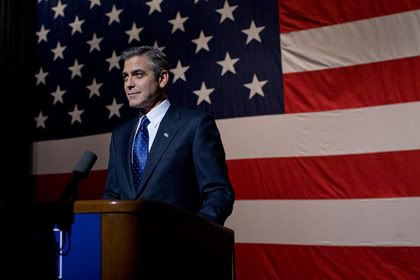
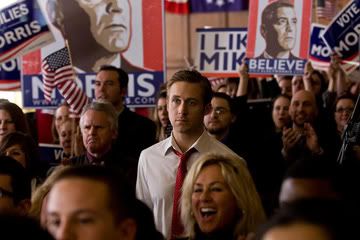
The fourth feature directed by George Clooney (following "Confessions of a Dangerous Mind," "Good Night, and Good Luck" and "Leatherheads"), "The Ides of March" provides us with knowledge a lot of us may already know: the current climate of American politics leaves no room for idealism and dignity. It's a harsh and cynical look at the modern presidential campaign landscape, but it's also less about the candidates and more about the campaign managers working for them. There is scheming, backstabbing and lapses in loyalty aplenty, and it's all a riveting inside look at the men behind the faces we end up voting for.

The movie stars Ryan Gosling playing another rather introverted character. It's a much different character than "Drive," but his focus and intensity remains the same. Just when we think we have him figured out, he surprises us with a twist of action. He plays Stephen Meyers, a press secretary for Pennsylvania Gov. Mike Morris (George Clooney) during a presidential primary in Ohio, which acts as a pressure cooker for the proceedings. Perfectly cast, Clooney plays Mike Morris as an idealistic fictional Obama in 2008 candidate who is articulate and promising with a new kind of politics. Stephen works under Paul Zara (Phillip Seymour Hoffman in top form), a seasoned campaign manager for Morris. On the other side of the playing field is Tom Duffy (Paul Giamatti), the campaign manager for the opponent Pullman. All of these men, save for Stephen, are hardened realists who know exactly how to play their pieces on the board. Young professionals such as Stephen have yet learned how to check their values at the door.

The screenplay (adapted from Beau Willimon's play "Farragut North") co-written by Clooney, Willimon and Grant Heslov paired with Clooney's understated direction brings conversations and exchanges to the utmost importance. The title suggests a grand sweeping Shakespearian theme, but Clooney's goals are actually much simpler and straightforward and, in such, create an even greater impact. What Clooney strives to present may not be wholly profound, but it is pulpy and provocative. I don't think the screenplay sticks in the knife as deeply as Clooney hopes, but he still assembles an astonishingly powerful cast to navigate murky waters where the lines of political and emotional agenda get skewed.

A New York Times reporter played by Marisa Tomei represents manipulative media involvement in the campaign looking for the best scoop. A key conversation between her, Stephen and Paul early on shows where true loyalty lies along with the real perception of any campaign -- it always divulges into disappointment no matter who takes the title. At one point Stephen receives a call from Tom Duffy with a job offer to change sides. Motives here become unclear. Does Duffy actually want Stephen, or does the offer simply work as a ploy? Stephen is just opportunistic and looking out for his best interest revealing a surprising but subtle amorality. The real focus of the plot doesn't arrive, however, until a scandal surfaces around a luscious intern named Molly (Evan Rachel Wood). Stephen is handsome and suave, so he charms Molly into bed but in the process learns some unnerving information.

From here the film is tight, smart and swiftly paced showing us everything we've already come to know about how campaigns are really run in this country. It plays as if the pressure cooker finally goes over, and scenes flow with boiling urgency. The revelations keep us riveted but what keeps us engaged and interested is the toxic and malevolent atmosphere that Clooney expertly upholds. It's down and dirty stuff with men in pressed suits, and it's all the more disturbing considering the setting. "The Ides of March" works like a wrenching punch to the gut in the acceptance that sometimes politics is just about keeping a job.

Sunday, April 4, 2010


Archive: "Michael Clayton" (2007)

Michael Clayton (George Clooney) is a fixer. He's the guy lawyers go to when they need some messes cleaned up. These are the kind of messes that lawyers wish to turn a blind eye to, the kind that must be avoided in high-stake lawsuits. Clayton doesn't break the law, but he knows how to bend it a little. He knows when to talk to the right people and how to smooth certain details out. He's not entirely proud of what he does. Late one night at a poker game, Clayton gets a call on his cell phone because a client of his law firm needs help with a hit-and-run just committed by that said client. When the client bitterly states that he thought Clayton was a miracle worker, Clayton states that he's only a janitor. Michael Clayton shoots down the man's options and tells him how it is because sometimes the truth hurts.

After the encounter, Clayton takes a drive and ends up at a serenely empty field. He gets out of his car to admire some horses up on the hill, and gazes at them silently to clear his head. Behind him, his car suddenly explodes. And that's when the movie officially begins as we go back four days previous. A friend of Clayton's from the law firm, Arther Edens (Tom Wilkinson), has gone completely berserk as he stripped down during a Milwaukee deposition and ran naked through a snowy parking lot. Edens has been defending a pesticide company called U North, which is in the middle of a $3 billion class-action lawsuit because the product supposedly killed many of the farmers who used it. His disgust with the company led him to this outbreak and has caused him to be labeled a manic-depressive, where the fact is that he actually may have come across a huge revelation.

Michael Clayton is sent in to keep Arther Edens in line, but there is also U North's counsel at work, Karen Crowder (Tilda Swinton). This is a woman who appears to have everything together from her neatly pressed suit coats to the pearls around her neck. Underneath that, however, is a legal shark ready to make the kill as she hires two watchmen to keep an extra eye on Arthur Edens. The issue behind all of this is simple: The corporation is guilty and knows that it's guilty, and the law firm defending it knows that it's guilty, too. Arther Edens, however, holds the piece of evidence that could blow everything wide open, and there are people out there that realize he must be kept quiet.

But, enough of the legal stuff; the movie is named after its title role for a reason. Michael Clayton has a secret life, one that involves a desperate $75,000 debt after a failed attempt to open a restaurant. He's divorced and only gets to drive his son to school and see him on Saturdays. He's forced to get the money for his debt from the head of the law firm, Marty Bach (Sydney Pollack), who has a viciously dry acceptance of corruption. So, you see, Clayton has his own messes to clean up. He has to discover what his own options are and what his own priorities are, which leaves less time to figure out those of his clients. George Clooney is the perfect fit for this character that is never seen without wearing a full suit. He, too, on the surface appears to have everything in check. Clooney just gets better and better as he brings a deeply rich and layered performance as a conflicted man struggling with his own problems while a ruthless legal case swirls around him. Watch his face in the credits after he gets in a cab and tells the driver to just drive anywhere to get away; just in that short and seemingly insignificant scene, there's a whole range of emotions.

Tony Gilroy makes a superb directorial debut with "Michael Clayton." His previous work was writing the screenplay for all three "Bourne" films. What makes this film such a crackling and absorbing legal thriller is that Gilroy doesn't back out by dumbing anything down. Every nook and cranny in the tense case is fully explored with no details left behind. Every scene counts, including one of a conversation between Clayton and his son, along with a scene of watching Crowder stand before her mirror preparing a speech; they're both entirely effective in their up-close views. Clooney is also supported by three solid performances; these include Swinton, Wilkinson, and Pollack, all of whom provide vivid clarity to the psyche of their characters. Just watching Clayton and Crowder face-off in a searing final confrontation is satisfying all on its own.

As the title suggests, this is a film driven by strong performances portraying strong characters. George Clooney all on his own brings a rough-edged, somber feel to the affair and sets the tone from the start. Through its realism behind the characters, this is a drama that has connections to today's life and is mature, accomplished, and profoundly engrossing. The idea may seem like something you have seen before, but "Michael Clayton" reinvigorates the genre and makes it feel brand new all over again. It's a tale about how far corporations are willing to go, the underhanded violence they're willing to dish out, the law firms that help them get away with it, and the loss of humanity behind certain decisions and schemes; most of all, though, it's a glimpse at a man who's not only fighting for his case, but his soul. It's mesmerizing and one of the year's best.

Saturday, December 26, 2009

Clooney Among The Clouds And Uncertainty

Up in the Air


Ryan Bingham (George Clooney) has what some would consider the worst job in the world: he's the man who has to tell other people they no longer have their job. He does the job that bosses and employers don't want to deal with, and so people like Ryan get hired to do just that. The thing is that Ryan loves his job, and he takes it as performing a service to others, something that demands procedure and protocol, both of which Ryan makes sure to have in order. He has no home and no family. While flying on a plane and asked where he lives, Ryan responds with "here."

If Ryan were played by any other actor aside from George Clooney, this man probably would have been despicable; however, with the snarky smarts of Clooney, he's relatable and likeable. His performance holds the same depth he brought to "Michael Clayton" where he also played a man whose soul was in jeopardy. Except here you'd swear that he's just playing himself, which allows it to seem so effortless. Director Jason Reitman ("Thank You for Smoking," "Juno") has pulled off something of beauty with his third feature, "Up in the Air," and Clooney is at the center of it. It is an intimate and scalding character study while at the same time a brilliant and aware cultural study. This is our culture, the state of the nation we live in. It's hard to pull off timeliness, but this movie does it with ease putting a face on the recession and the crisis of unemployment. It is cynically funny but also deeply sad while romantic but also unapologetic and real, and it's a clear example of what we need to see more often from major studios. It is a movie of our time and our moment, and it's the best of 2009.

Ryan spends his detached life flying around the country with endless supplies of passkeys to hotel rooms and airport lounges and with the best deals with those companies. He's a valued customer carrying around special VIP cards, and he especially has his eye on reaching a certain mystical number of frequent-flyer miles. This goal he holds in the highest esteem. He knows the ways of the airport and has perfected the systematic lifestyle, one which America is more and more leaning toward. It's a world of Blackberry, text messaging, and fitting each other into a tight schedule programmed into a laptop. Most importantly, it's a lifestyle of downsizing and not only in the workplace. On the side, Ryan gives self-help lectures where the topic is keeping the load of your rhetorical backpack as light as you can. The people he talks to are exactly the kind of people he fires. Ironically, however, Ryan is forced to literally carry around a piece of his family; it's a cardboard cut-out of his sister (Melanie Lynskey) and brother-in-law (Danny McBride) with which they want Ryan to take pictures of the places he goes.

Threatening Ryan's own job is the talented young Natalie (Anna Kendrick of "Twilight") who offers a promising solution of grounding the firings and completing them over the Internet. It would make what Ryan has lived for all his life entirely obsolete. In an attempt to scare Natalie, Ryan agrees to take her along to show her the ropes and what firing people can really do to one's sense of humanity. They even make a stop in, yes, Detroit, and they don't hesitate in making it seem to be in the worst economic condition. Ryan and Natalie's sparring is a delight because Natalie has fast-talking comebacks that catch even Ryan off-guard. Their relationship isn't at all meant to be romantic as that is saved for a fellow frequent-flyer, Alex (Vera Farmiga), who Ryan meets in an airport lounge. She's a corporate shark just like him, and she has a biting sensuality that is irresistible. To Ryan she describes herself as him just with a vagina. Both Kendrick and Farmiga are already up for award nominations, and rightfully so. They are pitch-perfect in their parts each relating to Clooney's character in different and complex ways and each peeling back more layers as things progress.

The movie is adapted from Walter Kirn's 2001 novel, and it feels so shockingly in-tune with the state of today's society all thanks to a screenplay from Reitman and Sheldon Turner and polished, sharp-eyed direction from Reitman. In the sequences where people are given the news, those aren't actors. Reitman auditioned real people who had really lost their job and told them to articulate their feelings for the camera. That stuff hits home. Actors are interspersed into this footage, as well, including Zach Galifianakis and J.K. Simmons.

"Up in the Air" has a title that not only refers to the act of frequenting air travel but also the feeling of being unemployed, the uncertainty and the unpredictability. To those people everything is up in the air. In the closing moments, Ryan looks straight into the audience with a look that is hard to define, one that could be of either hope or pain. The film is optimistic and pessimistic all at once, and it is finely nuanced in both directions. Is Ryan's future bleak or not? And what does that mean for everyone else? We've captured an era on-screen while it's still happening, and the only thing that can be said for sure is that everyone needs some company, a co-pilot.

Thursday, December 24, 2009

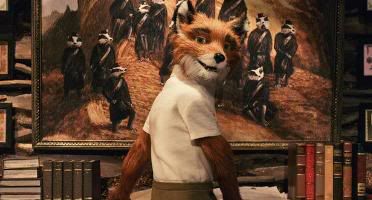
This Fox Really Is Fantastic

Fantastic Mr. Fox


Freely based off Roald Dahl's 1970 children's book, director Wes Anderson's ("The Royal Tenenbaums," "The Darjeeling Limited,") "Fantasic Mr. Fox" is pure joy, an animated fable that is a rough-and-tumble and tactile visual wonderment to behold. Anderson used stop-motion animation and the reported pain-staking labor it took to make this movie certainly paid off in the casual, nonchalant piece of art it really is. The thing with this director is that maybe he was meant to direct animated films all along because this way his world feels more believable and therefore becomes more endearing and also allows his wits and sharp humor to shine through the material. When he was once creating real-life twisted into the unreal, he has now transformed the talking animal world into something surprisingly real.

Rarely before has such texture exploded in a film with fur that shifts, moves, and sways, and smoke and foam made from cotton balls. This is also a world that breathes in shades of orange, brown, and colors of autumn whether it's from the earthy underground where the foxes live or from the color of the foxes' fur itself. The film is shot rather two-dimensionally with the camera rarely tracking in or out, and this helps to emphasize the storybook quality. The plot is ruled primarily by a riddle that is repeated through the movie even, in some cases, through the voice of singing children: Boggis and Bunce and Bean, one fat, one short, one lean. These horrible crooks, so different in looks, were nonetheless equally mean. Mr. Fox (voiced by George Clooney) was once a mischievous crook who stole chickens with his wife, Mrs. Fox (voiced by Meryl Streep). After a close call, Mr. Fox promised his wife never again. He retreats into a job of journalism writing a column but quickly gets the urge to return to thievery against the trio of evil farmers all the while doing so behind his wife's back.

There is also Mr. Fox's clumsy son, Ash (voiced by Jason Schwartzman), who wants to be considered naturally talented and athletic like his father. Unfortunately for Ash, his cousin Kristofferson (voiced by Eric Anderson) swoops in to do everything better, and he steals any thunder Ash might've had. He becomes the family's golden child, or fox, rather, and the story of this quarrel becomes of immense importance to the greater picture of all the animals. Badger (voiced by Bill Murray) gets Mr. and Mrs. Fox a nicer place to live above ground in a massive tree. Mr. Fox's undercover side work gets blown, however, and all of a sudden an all-out war is declared, and the animals are all digging underground to save their tails, sometimes even literally.

In the same spirit of Spike Jonze's "Where the Wild Things Are," this is a PG-rated movie that isn't so much for children. Like the book upon which that film is based, there are some dark undertones lurking here along with some violence and a large usage of tongue-in-cheek language using the word "cuss." But sometimes children's movies that push the boundaries are all the better for kids to endure, especially this one with a hero that has his own set of flaws. Mr. Fox certainly isn't perfect with his boastful and sometimes selfish personality. He is, however, grounded and realistic, and George Clooney's snarky attitude fits the part. They're all wild animals at heart, and the intelligent script by Anderson and Noah Baumbach ("The Squid and the Whale") don't ignore this fact. And in a moment where Mr. Fox meets his phobia, a wolf, the film strikes a high point of poignancy and profundity that comes as a welcome surprise.

Wes Anderson may be self-consciously aware of his hipness, especially with a quirky original song and fascinating score by Alexandre Desplat, but it is well-deserved and becomes even admirable with the resounding and seemingly effortless success this animated feature is. In the end, "Fantastic Mr. Fox" is, astonishingly enough, even better than Pixar's "Up," which is saying a lot. It definitely gets my vote for Best Animated Feature of the year.

Tuesday, September 15, 2009

More Clooney and Coen

From Jason Reitman, the director of "Thank You for Smoking" and the beloved Academy Award nominee "Juno," here comes "Up in the Air," the story of a man who lives his life in travel. It stars George Clooney in a role that is already being considered a sly variation of his Oscar-nominated performance in "Michael Clayton" and of the same high caliber. This crowd-pleaser that has audiences of the Toronto festival already in love is in speculation to garner a Best Picture nomination.


From the Coen brothers comes this most personal movie titled, "A Serious Man." This first trailer makes the movie out to look wryly comic and oddball while at the same time affectionate and insightful. It's a tough call whether or not this is looking at awards, but there's no doubt that this could be another accomplishment from the brotherly directing duo.